LC Stainless Magnetic Pump – Leak-Free, Durable, and Energy Efficient Solution for Industrial Applications
Introduction
In today’s competitive industrial world, efficiency, safety, and reliability are the key factors for any fluid transfer system. Industries such as chemical, pharmaceutical, petroleum, food processing, and environmental protection require pumps that can handle high temperatures, aggressive liquids, and corrosive environments without compromising performance. Traditional pumps often face issues such as leakage, high maintenance costs, and reduced lifespan when exposed to these challenging conditions.
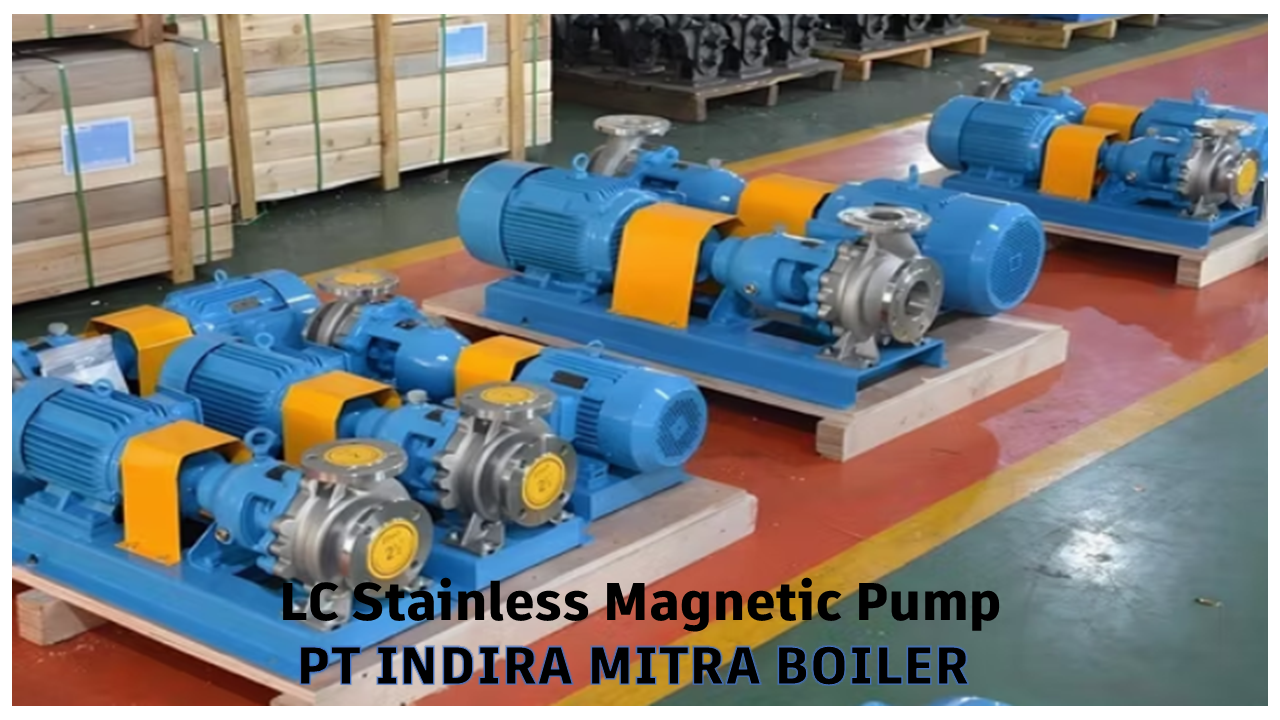
The LC Stainless Magnetic Pump is specifically designed to address these challenges. With advanced technology, heavy-duty construction, and magnetic coupling, this pump ensures zero leakage, high efficiency, and long-term durability. Compared with ordinary pumps like CQB models, the LC Magnetic Pump offers significant advantages, making it the ideal choice for demanding industries.
Features of LC Stainless Magnetic Pump
1. Leak-Free Magnetic Coupling
The LC pump uses internal magnetic coupling technology, eliminating direct contact between the motor and the pump chamber. This design prevents shaft seal leakage, ensuring 100% leak-proof operation, which is critical for transporting hazardous or corrosive liquids.
2. High-Temperature and Low-Temperature Resistance
This pump is capable of handling extreme temperatures, from -80°C up to +350°C, making it suitable for hot oil, acids, solvents, and cryogenic liquids. Its robust design guarantees reliable operation without thermal deformation.
3. Heavy-Duty Structure and Long Lifespan
Unlike ordinary market pumps, the LC model uses precision stainless steel castings (304/316L) and silicon carbide bearings (SSIC), ensuring wear resistance and long-term operation. The axial force self-balancing design minimizes friction, extending the service life of bearings and impellers.
4. Energy Saving and Environmental Protection
The LC stainless magnetic pump operates with high efficiency, reducing energy consumption. With no leakage and reduced friction, it contributes to a cleaner, safer, and more environmentally friendly workplace.
5. Easy Maintenance and Modular Design
Thanks to its modular structure, all wearing parts can be replaced on-site. The pump body, shaft, bearings, and impellers are designed for easy inspection and repair, lowering downtime and maintenance costs.
Applications of LC Stainless Magnetic Pump
The LC Stainless Magnetic Pump is versatile and can be applied in multiple industries, including:
-
Chemical Industry – Transfer of acids, alkalis, solvents, and corrosive chemicals.
-
Pharmaceutical Industry – Safe pumping of sensitive, high-purity liquids without contamination.
-
Petroleum Industry – Handling of flammable, explosive, and toxic liquids.
-
Food and Beverage Industry – Transport of edible oils, flavoring liquids, and hygienic fluids.
-
Paper and Textile Industry – Circulation of dyes, inks, and processing chemicals.
-
Electronics Industry – High-purity liquid transfer, cooling, and cleaning processes.
-
Environmental Protection – Wastewater treatment and safe transfer of hazardous fluids.
With such a wide range of applications, the LC magnetic pump is a universal solution for industries requiring safety, reliability, and performance.
Technical Advantages Compared to Ordinary Pumps
When compared to standard CQB magnetic pumps, the LC heavy-duty stainless pump demonstrates superior advantages:
-
Stronger anti-thrust design – Prevents bearing damage and reduces axial load.
-
Higher efficiency – Transfer torque with minimal energy loss.
-
Durable materials – Uses SSIC bearings, stainless steel shaft sleeves, and precision cast pump body.
-
Zero leakage design – Ensures safe transport of hazardous and valuable liquids.
-
Longer service life – Resists temperature changes, corrosion, and wear.
Why Choose LC Stainless Magnetic Pump?
✔ Leak-Free and Maintenance-Free Operation
✔ Resistant to Corrosive and Hazardous Liquids
✔ High Efficiency and Energy Saving
✔ Suitable for Extreme Temperatures (-80°C to +350°C)
✔ Long Service Life with SSIC Bearings and Stainless Steel Construction
✔ Ideal for Chemical, Pharmaceutical, Oil, Food, and Environmental Applications
Conclusion
The LC Stainless Magnetic Pump is more than just a pump – it is a reliable industrial solution designed for safety, durability, and efficiency. Whether your industry requires the transfer of flammable liquids, corrosive chemicals, or high-purity materials, this pump guarantees zero leakage, high performance, and long service life.
If you are looking for a cost-effective and reliable magnetic pump for your industrial needs, the LC Stainless Magnetic Pump is the perfect choice.
LC Stainless Magnetic Pump – Leak-Free, Durable, and Energy-Efficient Solution for Industrial Applications
The LC Stainless Magnetic Pump is an industrial centrifugal pump designed to transfer corrosive, hazardous, high-purity, or valuable liquids without using a conventional mechanical shaft seal. Instead, the pump uses a magnetic drive coupling to transmit motor power to the impeller through a sealed containment shell.
This sealless construction helps prevent liquid leakage, reduces routine seal maintenance, and improves operational safety. With stainless-steel wetted components, the LC magnetic pump is suitable for applications involving chemicals, solvents, acids, alkalis, additives, cleaning liquids, heat-transfer fluids, and other industrial process media.
What Is an LC Stainless Magnetic Pump?
An LC Stainless Magnetic Pump is a magnetically driven centrifugal pump. Its external magnet is connected to the electric motor, while the internal magnet is connected to the impeller. When the motor rotates, magnetic force transfers the rotation through the containment shell without requiring a shaft to penetrate the pump casing.
The liquid remains enclosed inside the pump chamber because there is no dynamic shaft seal between the motor and the process fluid. This operating principle provides several advantages:
- Minimal risk of process-liquid leakage
- No mechanical seal replacement
- Lower routine maintenance requirements
- Cleaner and safer working areas
- Suitable for corrosive and hazardous liquids
- Reduced risk of product contamination
- Reliable continuous operation when properly selected
The main SEO keyword for this product is LC Stainless Magnetic Pump, supported by related keywords such as stainless-steel magnetic drive pump, sealless chemical pump, leak-free industrial pump, and magnetic pump for corrosive liquids.
Main Components of the LC Magnetic Drive Pump
The construction of a magnetic pump is different from that of a conventional mechanically sealed centrifugal pump. Its primary components normally include:
-
Pump casing
The casing contains the process liquid and directs it from the suction connection toward the discharge connection.
-
Impeller
The rotating impeller converts motor energy into liquid flow and pressure.
-
Inner magnetic rotor
The internal magnetic assembly rotates the impeller inside the sealed liquid chamber.
-
Outer magnetic rotor
The external magnetic assembly is connected to the motor shaft and transfers torque to the inner magnet.
-
Containment shell
This component separates the process liquid from the atmosphere while allowing magnetic torque to pass through it.
-
Bearings and thrust components
Internal bearings support the impeller and rotor assembly. The bearing material must be compatible with the pumped liquid and operating temperature.
-
Electric motor
The motor supplies the mechanical power required to operate the pump.
The actual material specification may vary depending on the model. Before placing an order, users should confirm the stainless-steel grade, bearing material, gasket material, motor rating, maximum temperature, operating pressure, and chemical compatibility.
Why Use Stainless Steel?
Stainless steel offers good mechanical strength, durability, hygiene, and corrosion resistance. It is widely used in chemical processing, food production, pharmaceuticals, water treatment, and other industries requiring reliable process equipment.
However, stainless steel is not automatically compatible with every chemical. Certain chlorides, strong acids, oxidizing chemicals, or high-temperature solutions can still cause pitting, crevice corrosion, or stress corrosion cracking.
Pump selection should therefore consider:
- Chemical name and concentration
- Operating temperature
- Liquid density
- Liquid viscosity
- Presence of suspended solids
- Chloride concentration
- Required flow rate
- Required total dynamic head
- Operating pressure
- Continuous or intermittent operation
- Cleaning and flushing procedures
A chemical-resistance check remains necessary even when the pump is manufactured from stainless steel.
Key Benefits of the LC Stainless Magnetic Pump
1. Leak-Free Pumping System
A conventional pump normally uses a mechanical seal at the point where the rotating shaft passes through the casing. Over time, the seal faces can wear, become misaligned, overheat, or become damaged by particles. These conditions can cause dripping or serious leakage.
The LC magnetic pump removes this external rotating shaft penetration. Consequently, the process liquid is enclosed within a static containment system.
This design is particularly useful for transferring:
- Corrosive chemicals
- Toxic liquids
- Solvents
- Odorous liquids
- Expensive additives
- High-purity process fluids
- Liquids that must not contact the surrounding atmosphere
Although commonly described as leak-free, the pump still requires correct installation and maintenance. Gaskets, casing joints, connections, and the containment shell must remain in good condition.
2. Reduced Maintenance
Mechanical seals require periodic inspection and replacement. Maintenance may include changing seal faces, O-rings, springs, sleeves, and lubricating or flushing components.
A magnetic pump eliminates mechanical-seal maintenance. The operator can therefore reduce:
- Seal replacement frequency
- Emergency shutdowns caused by seal leakage
- Chemical cleanup costs
- Spare mechanical-seal inventory
- Labour required for seal alignment
- Production losses during seal repairs
Internal bearings and magnetic components still require proper operating conditions. The pump should never be considered maintenance-free.
3. Better Workplace Safety
Chemical leakage can expose operators to hazardous substances, produce dangerous vapours, damage nearby equipment, and contaminate floors or drainage systems.
A sealless magnetic pump provides an additional level of containment. This can support safer chemical-handling procedures, especially in enclosed production areas.
Safety systems may still be required, including:
- Leak detection
- Ventilation
- Secondary containment
- Emergency shutdown
- Dry-run protection
- Motor overload protection
- Appropriate personal protective equipment
4. Energy-Efficient Operation
The pump can provide efficient liquid transfer when the model is selected close to its best efficiency point. Energy performance depends on the entire pumping system rather than the pump name alone.
Efficiency can be improved by:
- Selecting the correct pump capacity
- Avoiding excessive oversizing
- Minimizing piping resistance
- Using the correct pipe diameter
- Maintaining adequate suction conditions
- Avoiding partially closed discharge valves
- Using a variable-frequency drive where appropriate
- Keeping filters and strainers clean
- Monitoring flow, pressure, and motor current
A magnetic coupling introduces some internal losses, particularly through the containment shell. Therefore, the most energy-efficient solution must be determined from the actual duty point and system design.
Industrial Applications
The LC Stainless Magnetic Pump can be used in many industrial processes, subject to material and hydraulic compatibility.
Common applications include:
- Chemical transfer systems
- Acid and alkali circulation
- Solvent transfer
- Detergent and cleaning-liquid systems
- Electroplating processes
- Water-treatment dosing systems
- Laboratory and pilot plants
- Pharmaceutical processing
- Food and beverage production
- Cosmetic manufacturing
- Printing and coating systems
- Electronic-component production
- Heat-transfer liquid circulation
- Tank unloading and transfer
- Process skid packages
For flammable liquids, the motor, instrumentation, earthing arrangement, and installation area must comply with the applicable hazardous-area requirements. A stainless magnetic pump should not automatically be assumed suitable for an explosive atmosphere.
Industrial Case Study: Chemical Transfer System
Project Background
A chemical-processing plant used a conventional centrifugal pump to transfer a corrosive cleaning solution from a storage tank to a production mixing tank.
The operating conditions were approximately:
| Parameter | Operating Data |
|---|---|
| Liquid | Corrosive cleaning solution |
| Required flow | 8 m³/h |
| Total dynamic head | 22 m |
| Operating temperature | 45°C |
| Operating schedule | 16 hours/day |
| Pump location | Indoor process area |
| Previous pump | Mechanical-seal centrifugal pump |
The original pump experienced repeated seal leakage. Small leaks occurred several times during operation, requiring the maintenance team to stop the system, clean the surrounding area, and replace the mechanical seal.
Problems Identified
Inspection found several contributing factors:
- The chemical affected the elastomeric seal components.
- The pump frequently operated below its recommended flow range.
- Operators occasionally started the pump before completely opening the suction valve.
- Liquid crystallization occurred around the seal chamber after shutdown.
- The maintenance team used different replacement seal brands.
- Piping stress affected the alignment between the pump and motor.
The problem was not caused by the mechanical seal alone. Process conditions, operating procedures, and installation quality also contributed to the failures.
Proposed Solution
The plant replaced the old pump with an appropriately sized LC Stainless Magnetic Pump. The new system included:
- Stainless-steel wetted components compatible with the liquid
- A magnetic drive without an external shaft seal
- Dry-run protection
- Motor overload protection
- Suction pressure monitoring
- A minimum-flow return line
- Revised startup and shutdown procedures
- Flushing connection for cleaning after operation
- Improved piping support
The pump duty point was selected near the recommended operating range instead of choosing an excessively large pump.
Results
After the system was upgraded, the plant recorded several operational improvements:
- External mechanical-seal leakage was eliminated.
- Chemical cleanup activities were substantially reduced.
- Maintenance no longer needed routine seal replacements.
- The process area became cleaner and safer.
- Pump operation became more stable.
- Energy consumption improved because the pump was selected closer to the actual duty point.
- Production interruptions related to seal failures were reduced.
The case demonstrates that a magnetic pump can provide significant benefits when pump selection, material compatibility, installation, and operating procedures are addressed together.
Comparative Study: Magnetic Pump vs Mechanical-Seal Pump
| Comparison Factor | LC Stainless Magnetic Pump | Mechanical-Seal Centrifugal Pump |
|---|---|---|
| Shaft sealing | Magnetic coupling and containment shell | Mechanical shaft seal |
| Leakage potential | Very low under normal conditions | Seal can drip or leak after wear |
| Routine seal maintenance | Not required | Periodically required |
| Internal bearing sensitivity | High; liquid lubrication is important | Depends on pump design |
| Dry-running tolerance | Generally poor | Varies by seal and pump design |
| Solid-particle handling | Usually limited | More options are available |
| Initial purchase cost | Often higher | Often lower |
| Lifecycle cost | Potentially lower for hazardous liquids | Can increase due to repeated seal maintenance |
| Chemical containment | Excellent | Depends on seal system |
| Maintenance complexity | Fewer external sealing components | Seal adjustment and replacement required |
| High-viscosity suitability | Must be carefully evaluated | More configurations may be available |
| High-temperature suitability | Limited by magnets, bearings, and shell | High-temperature seal systems are available |
| Ideal application | Clean, corrosive, hazardous, or high-value liquids | General industrial liquids and demanding process conditions |
When Is a Magnetic Pump the Better Choice?
The LC Stainless Magnetic Pump is generally more attractive when:
- Even a small amount of leakage is unacceptable.
- The liquid is corrosive, hazardous, odorous, or expensive.
- Mechanical-seal failures occur repeatedly.
- The liquid is relatively clean.
- The pump can remain completely flooded.
- Adequate dry-run protection can be installed.
- Lower maintenance and improved containment justify the initial investment.
When Is a Mechanical-Seal Pump More Suitable?
A conventional pump may be more appropriate when:
- The liquid contains significant suspended solids.
- Dry-running conditions cannot be reliably prevented.
- The liquid is extremely viscous.
- The process operates at very high temperature.
- Large particles or crystallizing products are present.
- Maintenance personnel can safely manage seal replacement.
- A specialized seal-flushing system is already available.
The best pump is not simply the one with the lowest purchase price. Selection should be based on safety, reliability, maintenance, energy use, process compatibility, and total lifecycle cost.
Cost Comparison Example
Consider two pumps operating in the same chemical-transfer service.
| Cost Component | Magnetic Pump | Mechanical-Seal Pump |
|---|---|---|
| Initial investment | Higher | Lower |
| Mechanical-seal replacement | None | Periodic |
| Chemical cleanup | Minimal under normal operation | Possible after seal leakage |
| Production shutdown | Lower when correctly operated | May increase with seal failure |
| Routine inspection | Required | Required |
| Internal bearing replacement | Periodic when worn | Depends on pump type |
| Environmental risk | Lower | Higher if the seal leaks |
A magnetic pump may deliver a lower total cost of ownership even if its initial price is higher. However, this advantage depends on correct operation. Damage caused by dry running, cavitation, or blocked circulation can eliminate the expected savings.
Installation Recommendations
For reliable performance, the LC Stainless Magnetic Pump should be installed according to sound engineering practices.
Suction Piping
The suction line should be as short and direct as possible. Avoid unnecessary elbows, restrictions, and undersized piping.
Recommended practices include:
- Use flooded suction whenever possible.
- Install the pump below the minimum tank-liquid level.
- Avoid air pockets in the suction pipe.
- Provide sufficient net positive suction head.
- Use an eccentric reducer with the correct orientation.
- Ensure all suction connections are airtight.
- Clean the pipeline before starting the pump.
- Install a strainer only when pressure loss is acceptable.
Discharge Piping
The discharge side should include:
- Pressure gauge
- Isolation valve
- Check valve where required
- Flow indicator or flow meter
- Minimum-flow bypass when necessary
- Proper piping supports
Do not use the pump casing to support the weight of the piping.
Electrical Protection
Recommended electrical and control protection includes:
- Motor circuit breaker
- Overload relay
- Phase-failure protection
- Dry-run protection
- Low-level tank interlock
- High-temperature alarm
- Flow switch
- Emergency-stop circuit
- Variable-frequency drive when compatible with the pump and process
Common Operating Problems
Dry Running
Magnetic pumps normally rely on the pumped liquid to cool and lubricate internal bearings. Running without liquid can rapidly damage bearings, thrust washers, the containment shell, and magnetic components.
Possible protection methods include:
- Low-level sensor in the supply tank
- Suction-pressure switch
- Flow switch
- Motor power monitor
- Automatic shutdown interlock
Cavitation
Cavitation occurs when suction pressure falls below the liquid’s vapour-pressure requirement. Symptoms may include noise, vibration, reduced flow, unstable pressure, and impeller damage.
The solution may involve:
- Increasing the liquid level
- Increasing suction-pipe diameter
- Reducing liquid temperature
- Cleaning the suction strainer
- Reducing pump speed
- Removing unnecessary suction restrictions
Magnetic Decoupling
If the pump requires more torque than the magnetic coupling can transmit, the inner and outer magnetic assemblies may lose synchronization.
Possible causes include:
- Excessive viscosity
- Blocked discharge piping
- Foreign material inside the pump
- Bearing seizure
- Incorrect operating point
- Liquid crystallization
- Excessively rapid motor acceleration
The pump should be stopped immediately and inspected. Repeatedly restarting it without finding the cause may lead to serious internal damage.
Corrosion
Corrosion may result from incorrect stainless-steel selection or unsuitable gasket and bearing materials. Always verify compatibility using the actual chemical concentration and temperature.
Maintenance Checklist
Even though the LC Stainless Magnetic Pump has no mechanical seal, preventive maintenance remains essential.
Inspect the following:
- Abnormal noise and vibration
- Suction and discharge pressure
- Flow rate
- Motor current
- Bearing condition
- Casing and connection leakage
- Gasket condition
- Containment shell condition
- Magnetic coupling condition
- Pump temperature
- Filter or strainer cleanliness
- Electrical interlocks
- Alignment and foundation bolts
- Signs of corrosion or crystallization
Maintenance intervals should be based on operating hours, fluid characteristics, temperature, and the manufacturer’s recommendations.
Frequently Asked Questions
Is an LC Stainless Magnetic Pump completely leak-free?
The pump has no conventional rotating shaft seal, which significantly reduces leakage risk. However, casing gaskets, pipe connections, and the containment shell must still be properly installed and maintained.
Can the pump operate without liquid?
Generally, no. Dry running can damage internal bearings and other components. Dry-run protection is strongly recommended.
Can it pump acids and alkalis?
It can handle certain acids and alkalis if all wetted materials are chemically compatible. Chemical name, concentration, and temperature must be checked before selection.
Is stainless steel suitable for hydrochloric acid?
Many common stainless-steel grades have limited resistance to hydrochloric acid, particularly at higher concentrations and temperatures. Alternative materials may be required.
Can a magnetic pump handle solid particles?
Most magnetic pumps are designed for clean liquids. Abrasive or magnetic particles can damage internal bearings and the containment system. Filtration or a different pump design may be necessary.
Can a variable-frequency drive be used?
A VFD can be used when approved for the selected motor and pump. Minimum speed, cooling, internal circulation, and operating range must be considered.
Is the magnetic pump more energy efficient?
It can be energy efficient when correctly sized and operated near its best efficiency point. Energy performance depends on the complete hydraulic system, motor efficiency, operating flow, and control method.
What information is required for pump selection?
Provide the liquid name, concentration, temperature, density, viscosity, solids content, required flow, total head, suction condition, operating hours, pipe size, voltage, frequency, and hazardous-area classification.
Conclusion
The LC Stainless Magnetic Pump is a reliable solution for industries that require safe, clean, and controlled liquid transfer. Its sealless magnetic-drive construction reduces the possibility of process leakage and eliminates routine mechanical-seal replacement.
Compared with a conventional mechanical-seal centrifugal pump, the LC magnetic pump can offer better chemical containment, lower maintenance requirements, cleaner operation, and competitive lifecycle costs. Its actual performance, however, depends on proper material selection, hydraulic sizing, suction conditions, dry-run protection, and operator training.
For clean corrosive liquids, solvents, additives, high-purity chemicals, and other sensitive process fluids, the LC Stainless Magnetic Pump can be an effective leak-resistant, durable, and energy-efficient industrial pumping solution.
👉 Contact us today for pricing, specifications, and professional consultation to find the best pump model for your application.